A clearer way to manage every project.
One system for the whole project, from first meeting to handover, with the client able to see where things stand without being told.
How it worked until then
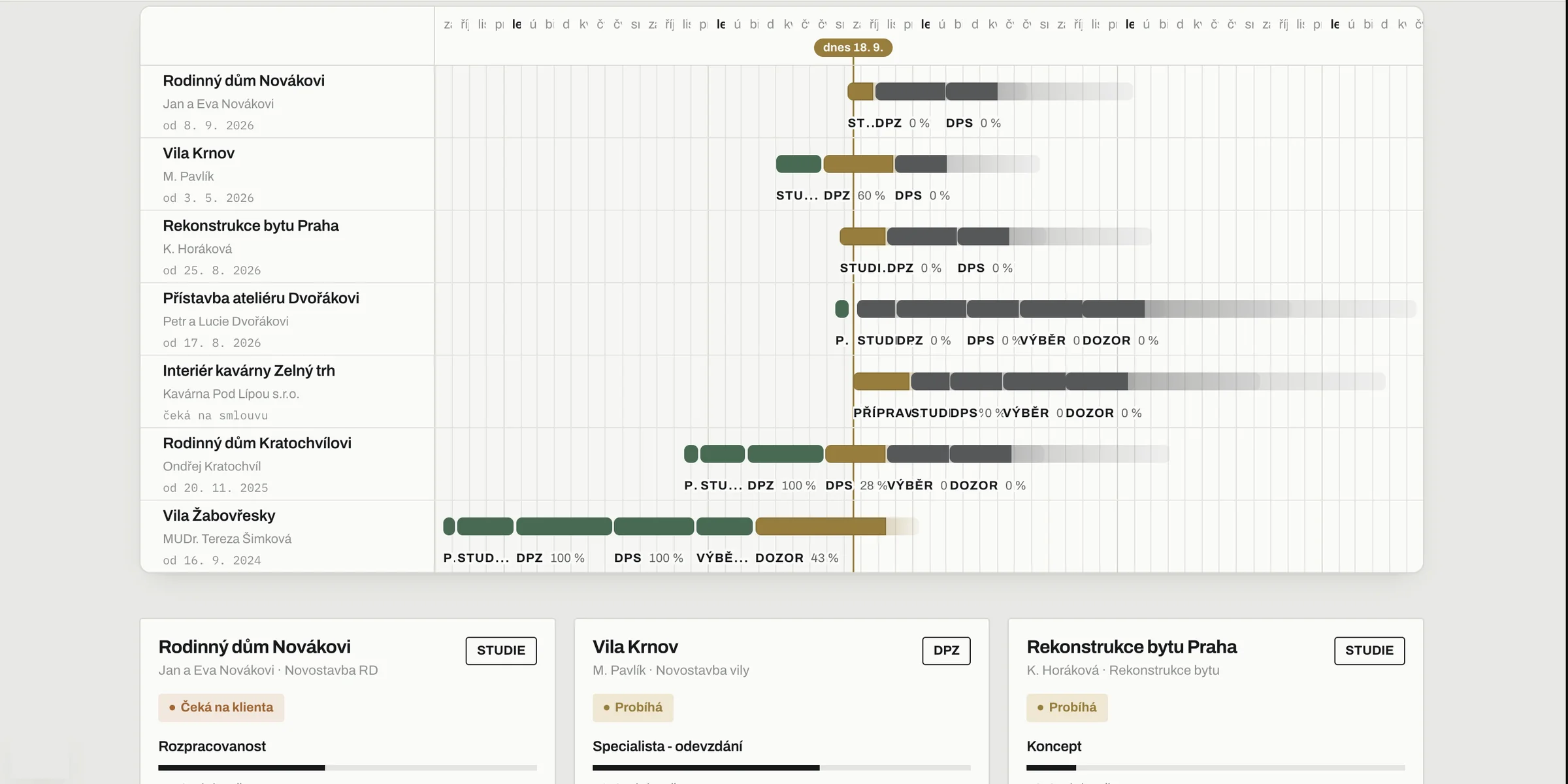
Progress lived across several different apps. There was no single place that showed where a project actually stood, so keeping the client informed depended on somebody remembering to do it.
Updates went out when there was time, not when something changed. The gaps had a cost: a client who should have been chased sometimes wasn't, because nobody could see that they were due.
The parts that mattered
The whole project in one place
Every project runs through defined phases, from the first meeting through concept and drawings to handover. Each phase carries its own checklist with an owner against every task, so what is done, what is next and whose turn it is are all visible at a glance.
The client sees it themselves
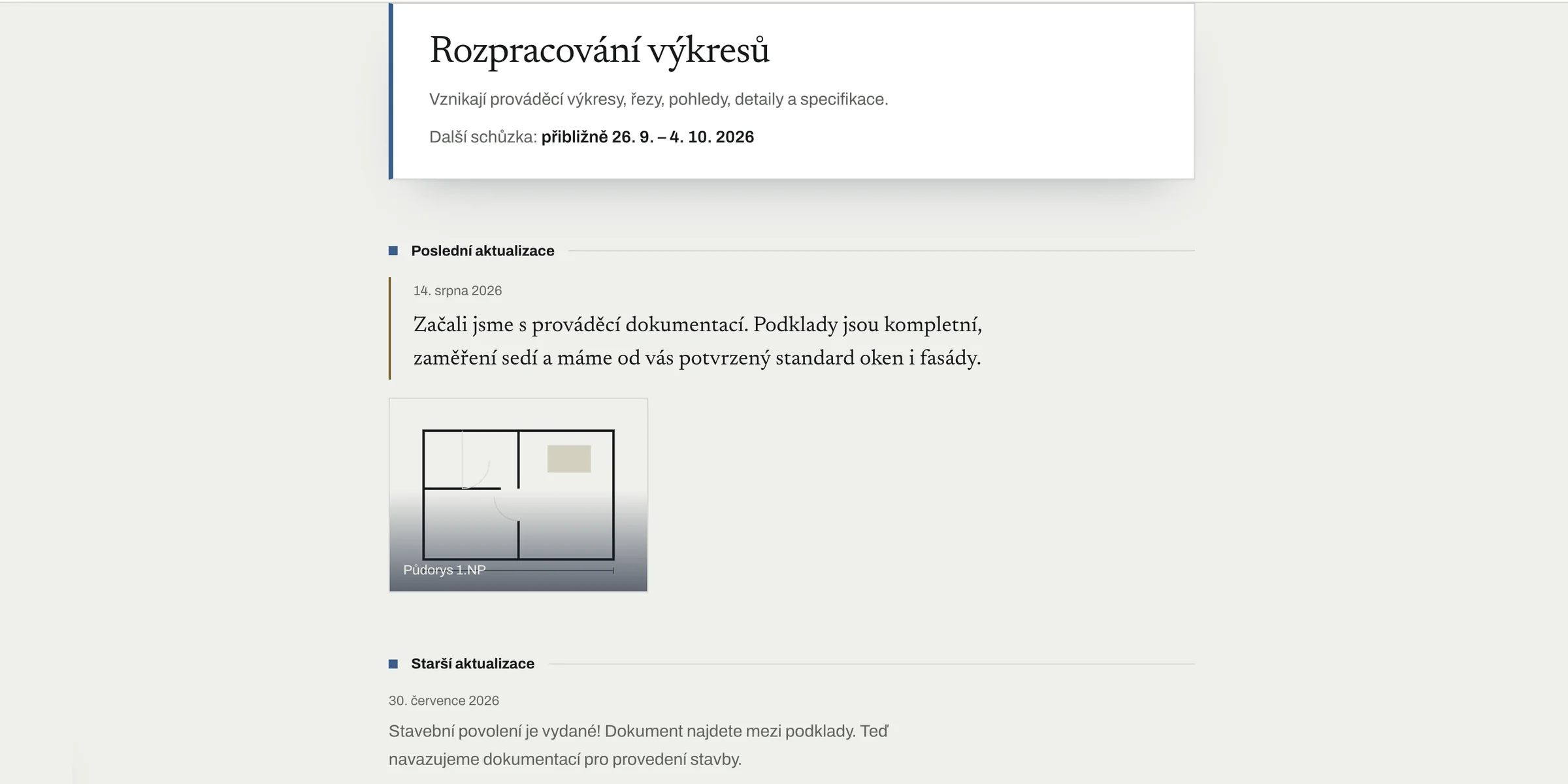
Instead of the architect calling or messaging, the client has their own view of the project: how far along it is, what has been delivered and what is coming next. The update happens because the work happened, not because someone remembered to write it.
Nothing reaches the client unapproved
Updates are assembled inside the tool: pick the drawings or renders, add a note, publish. The architect stays in control of the wording, and the client sees nothing until it is sent.
Payments tracked against the work
Each payment stage sits alongside the phase it belongs to, so an invoice that is prepared but unsent is visible rather than forgotten. The thing that used to slip quietly is now simply on screen.
What changed
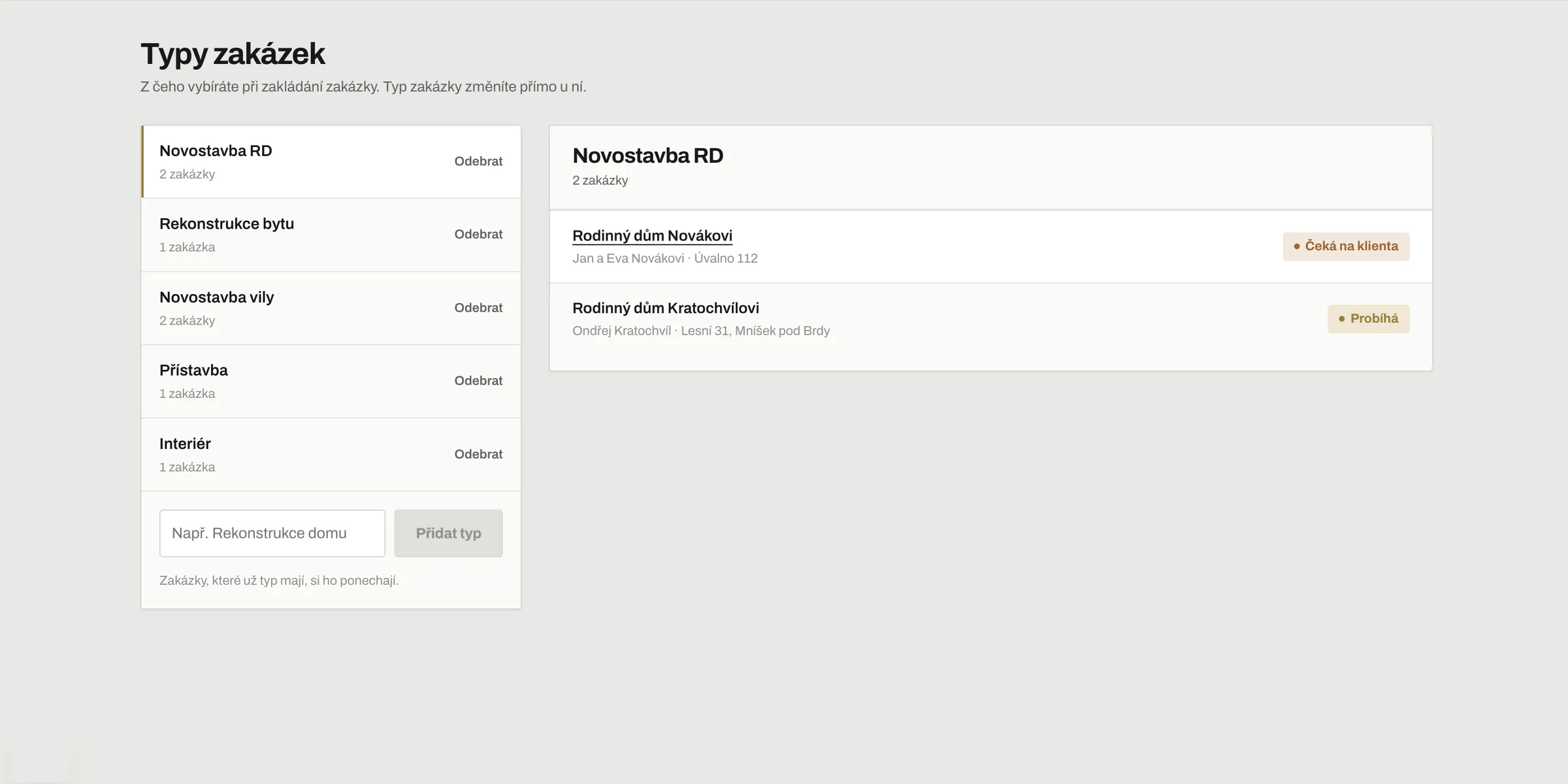
The status call largely went away. The client can see where things stand without asking, and the architect can see which projects need pushing, including the ones that would previously have slipped.
Build notes
- An architecture studio
- Internal system + client portal
- Czech